Why Clean Panels Matter More Than You Think
Let's be honest — when you went solar, nobody warned you that your panels would need the occasional bath. They sit up there quietly doing their thing, soaking up the New Jersey sunshine and shaving money off your electric bill, so it's easy to forget they exist at all. And that's exactly the problem. Out of sight, out of mind, and slowly out of pocket.
Here at Window Genie of Northeast NJ in Ho-Ho-Kus, we spend our days making glass sparkle, and solar panels are just one more piece of glass that works a whole lot better when it's clean. The difference between a panel that's been left to fend for itself and one that's been properly cleaned can be surprisingly dramatic. We're talking real kilowatts, real dollars, and a real return on the investment you already made. So grab a coffee, and let's walk through everything you actually need to know about keeping those panels clear — and why, when it comes time for the actual cleaning, calling in a pro is almost always the smarter play.
The Science of Soiling: How Dirt Steals Your Power
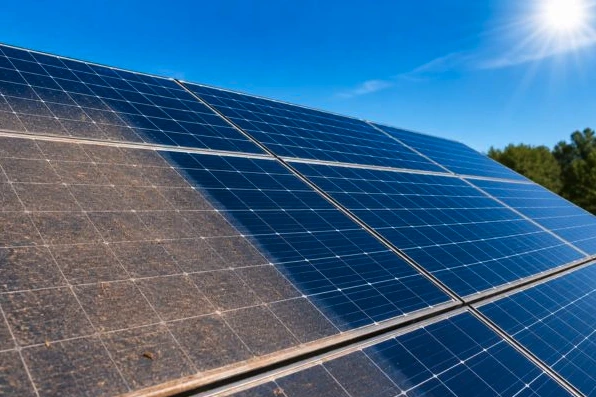
Solar panels make electricity when light hits the photovoltaic cells underneath the glass. Simple enough. But anything sitting on top of that glass — dust, pollen, bird droppings, you name it — blocks, scatters, or absorbs that light before it ever reaches the cells. Less light in means less power out. It really is that direct.
What Builds Up on Your Panels
In our corner of New Jersey, the usual suspects are tree pollen (oak, birch, and grass are the worst offenders in spring), flower petals, windblown dust, road grime, and the ever-charming gift of bird droppings. Homes near trees or open fields tend to collect the most. Throw in some early-season leaf debris and a little nesting activity, and you've got a film forming on your panels before you've even noticed a change.
How Much Efficiency You Actually Lose
This is where people's eyebrows go up. A light dusting might only cost you a few percent, but moderate buildup can knock output down 8 to 15 percent, and heavy soiling — think caked-on dust plus bird splatter plus organic growth — can steal 20 percent or more. That's not a rounding error. That's a chunk of the savings you bought those panels for, evaporating quietly month after month.
Hot Spots and Long-Term Cell Damage
It gets worse than lost output. When something like a bird dropping shades a single cell, that cell can't generate properly and instead starts dissipating energy as heat. We call these "hot spots," and sustained hot spots can permanently degrade cells and, in extreme cases, even crack the glass. So a little stain you ignore today can turn into actual hardware damage down the road.
How Often Should You Clean Your Solar Panels?
Here's the part everyone wants a tidy answer to, and the honest truth is: it depends on where you live.
The General Rule: Once or Twice a Year
For most New Jersey homes, one or two cleanings a year does the job. That baseline keeps the vast majority of soiling losses in check without overdoing it.
Location and Environment Factors
If you're surrounded by tall trees, near a busy road, or close to open farmland, you'll likely want to bump that up. City dust, vehicle exhaust, suburban pigeon traffic, and rural pollen explosions all accelerate buildup. Some homes do great on an annual schedule; others need quarterly attention.
Seasonal Cleaning Schedules
Timing matters as much as frequency. Late spring is the sweet spot in our region — the worst of the pollen has usually settled, tree shade hasn't fully filled in yet, and you're cleaning right before the highest-production months of June, July, and August roll in. Clean before peak season, not after, and you capture power when it counts most.
Coastal, Urban, Rural, and Hill-Region Differences
Soiling isn't one-size-fits-all. Coastal areas deal with salt and humidity-driven algae. Urban and industrial zones get fine grime and exhaust particles. Rural spots get pollen and field dust. Wherever you are, the local conditions decide your ideal rhythm — and a quick professional inspection can tell you exactly what yours should be.
Signs Your Solar Panels Need Cleaning
Your panels won't text you when they're dirty, so you've got to watch for the calls that signal it's time for solar panel cleaning.
A Sudden Dip in Energy Production
If your monitoring app shows output sliding and the weather hasn't changed to explain it, dirt is a likely culprit.
Visible Dirt, Film, and Grime
Sometimes it's obvious — step outside, look up, and if the panels are wearing a grey-brown haze, it's time.
Comparing Output Data Before and After
The most reliable method is data. Note your production on a clear day, get the panels cleaned, then check production on the next equally sunny day. The jump tells you how much you were losing — and helps you dial in how often you really need a cleaning.
The Rain Myth: Does Nature Clean Your Panels for You?
Ah, the classic: "I don't need to clean them, the rain does it for me." We hate to be the bearers of bad news, but rain is a mediocre janitor at best. It rinses off loose dust, sure, but it does nothing for sticky pollen, sap, or bird droppings. Worse, rain can actually clump fine particles together into streaks and patches that shade your cells unevenly. So no — Mother Nature is not handling this one for you.
How Tilt and Drainage Affect Cleanliness
Why Angle Matters
Gravity is a quiet helper here. Panels with a decent tilt let water run off and carry some debris along with it, so they tend to stay cleaner between washes. Flat or low-angle installations hold onto muck and standing water far longer.
Drainage Solutions and Self-Cleaning Aids
Good water drainage prevents stagnant pools that turn into grime magnets, and there are drainage and coating products designed to reduce buildup over time. They cut down on how often you need a wash — but they don't replace a proper cleaning entirely.
Common Mistakes That Damage Solar Panels
This is the section we wish more homeowners read before grabbing a hose. Here are the big ones to steer clear of:
- High-pressure washing: Pressure washers can force water under the frame seals, wreck weatherproofing, and even void your warranty. Solar glass is not a driveway.
- Abrasive materials: Steel wool, rough pads, and stiff brushes leave micro-scratches that scatter light, permanently lower output, and trap even more dirt going forward.
- Harsh chemicals: Solvents, bleach, and strong degreasers damage anti-reflective coatings, corrode aluminum frames, and etch the glass. Stick to gentle, glass-safe solutions only.
- Walking on panels: It seems harmless until it isn't. Panel glass isn't built to bear your weight, and standing on it can cause hidden cell fractures that instantly void your warranty.
Every one of these is an expensive lesson, and every one of them is avoidable.
Cleaning Isn't Just About Dust: Other Maintenance Concerns
Birds, Nests, and Wildlife Damage
That space under your panels is prime real estate for birds building nests, and those nests can damage wiring and attract predators. Squirrels and raccoons aren't above chewing through conduit or loosening your mounting bolts, either.
Tree Growth and New Shade
Trees grow. The branch that cleared your roof three years ago might now be throwing morning or afternoon shade across your array, quietly cutting output in a way that has nothing to do with dirt.
Wiring, Mounts, and Seal Inspections
A cleaning visit is the perfect moment to eyeball loose mounts, exposed wiring, seal integrity, and debris tucked under the panels — the kind of stuff you'd never spot from the ground.
Why Professional Solar Cleaning Is the Smart Choice
Here's where we get to the heart of it. Could some folks clean their own panels? On a low, easy-access roof, maybe. But for most homeowners, is the safer, smarter, and frankly more effective route — and here's why.
Safety on Roofs and at Height
Pitched roofs, second stories, ladders, and soapy water are a genuinely dangerous combination. Every year people get hurt doing rooftop work they weren't equipped for. Our team follows fall-prevention safety standards so nobody's risking a trip to the ER to save a few bucks.
Protecting Your Warranty
Use the wrong tool or technique and you can void the warranty on equipment that cost you thousands. Professionals know exactly how to clean without crossing those lines, keeping your coverage intact.
Professional Equipment and Deionized Water
We use tools designed specifically for solar glass and, where it matters, deionized water that dries spot-free — no mineral streaks left behind to make the panels dirtier than before. That's a level of finish a garden hose simply can't match.
Thermographic Scans and Performance Verification
The best maintenance visits go beyond a wash. Infrared scans can reveal hot cells and electrical faults you'd never see with the naked eye, and post-cleaning production checks confirm you're actually getting the boost you paid for.
When a Broader Maintenance Visit Makes Sense
If it's been more than a year since anyone gave your system a real look, pair your cleaning with a fuller inspection. Catching a loose connection or a failing seal early is a whole lot cheaper than dealing with the aftermath later.
Robotic Cleaning for Large and Commercial Installations
For big commercial rooftops and ground-mounted solar farms, robotic cleaning systems have become the go-to. They run autonomously along the panel rows, often clean dry without water, and can be scheduled daily. For massive arrays, the labor savings and consistent output gains make them pay for themselves surprisingly fast. For a typical home, though, professional service is the right-sized answer.
Advanced Protection: Coatings and Self-Cleaning Glass
Premium panels often come with anti-reflective coatings that squeeze out a little extra generation, hydrophobic nano-coatings that make water bead up and roll off with the dirt, and photocatalytic self-cleaning glass that uses sunlight to break down organic gunk. They're not magic — inorganic mineral dust still needs a real cleaning — but in pollen-heavy or coastal areas, they're worth asking about.
Monitoring Output to Find Your Optimal Cleaning Schedule
Stop guessing and let the data lead. Watch your production numbers, note how much you recover after each cleaning, and adjust from there. If you're regaining double-digit percentages after just a couple weeks, you need more frequent service. If recovery is tiny after a couple months, you can stretch the interval. Your roof, your trees, your schedule — the numbers will tell you the truth.
Final Thought: A Clean System Is a Profitable System
At the end of the day, solar panel cleaning isn't complicated, but it is important. Clean panels produce more power, last longer, and deliver the return you signed up for when you went solar in the first place. Dirty ones quietly drain your savings and, left long enough, can even damage themselves. A little attention at the right time of year — especially heading into our bright New Jersey summers — makes a visible difference where it matters: your energy bill.
And while the science is simple, the rooftop work is anything but. Between the safety risks, the warranty concerns, and the specialized equipment that actually does the job right, this is one of those tasks best left to people who do it every day. If your panels are looking dull, your production's dipping, or you just can't remember the last time anyone gave them a proper clean, reach out to Window Genie of Northeast NJ in Ho-Ho-Kus today — we'll get your system shining and working its hardest, so you can get back to enjoying the savings.